
Article Directory
- Introduction: Navigating the Landscape of Global Textile Manufacturers
- The Critical Role of Strategic Sourcing in Modern Supply Chains
- Beyond Price: Key Factors for Selecting Fabric and Yarn Partners
- Who This Guide Is For: A Roadmap for Industry Professionals
- Chapter 1: The Titans of Scale – Integrated Textile Giants
- 1.1 Defining the Integrated Model: From Fiber to (Sometimes) Finished Product
- 1.2 Core Strengths and Strategic Value for Large-Volume Buyers
- 1.3 Featured Giants: Weiqiao, Hengli, Shenghong, and Rongsheng
- 1.4 Comparative Analysis Table: Integrated Conglomerates
- Chapter 2: Masters of Specialization – Leading Yarn & Fabric Experts
- 2.1 The Power of Niche Focus: Innovation, Quality, and Service
- 2.2 Spotlight on Excellence: Cotton, Blends, and Technical Fibers
- Luthai Group: Premium Shirtings and Fabrics
- Tianhong Textile: Comprehensive Yarn Solutions
- Huafu Yarn / BROS: Leaders in Colored Spun Yarn
- Wuxi No.1 Cotton: The Pinnacle of Ultra-Fine Cotton Yarn
- 2.3 Performance Data Table: Specialized Manufacturers
- Chapter 3: The Innovators and Niche Players
- 3.1 High-Performance and Technical Yarn Manufacturers
- Shenma Industrial: Global Leader in Nylon 66 Industrial Yarn and Cord Fabric
- Global Players in High-Tenacity Polyester Yarn: An Overview
- 3.2 Agile Partners for Customization and Flexible Supply
- Rouxu Trading: A Case Study in High-End, Small-Batch Customization
- Vertical Integration for Control: The “Deli” Model of Setting Up Dedicated Yarn Mills
- 3.1 High-Performance and Technical Yarn Manufacturers
- Chapter 4: The Digital and Ecosystem Architects
- 4.1 Beyond Manufacturing: The Rise of Supply Chain Integrators
- 4.2 Yarnbillions (YarnXianYi): A Deep Dive into an Industrial Internet Platform Model
- 4.3 Value Proposition: How Digital Platforms Mitigate Risk and Enhance Efficiency
- Chapter 5: Building Your Sourcing Strategy – A Practical Framework
- 5.1 Step 1: Define Your Priority Matrix (Volume, Cost, Innovation, Speed)
- 5.2 Step 2: Match Manufacturer Type to Your Product and Business Needs
- 5.3 Step 3: Due Diligence and Vetting Checklist
- 5.4 Sourcing Decision Flowchart
- Conclusion: Future-Proofing Your Supply Chain
- Key Takeaways for Sustainable and Resilient Procurement
- Final Recommendations for Industry Leaders
- Frequently Asked Questions (FAQs)
A Global Sourcing Guide: Finding the Right Fabric and Yarn Manufacturers for Your Business
1. Introduction: Navigating the Landscape of Global Textile Manufacturers
In today’s interconnected and demanding textile industry, What are the Fabric and Yarn Manufacturers? your choice of fabric and yarn manufacturer is more than a simple vendor selection—it is a strategic decision that impacts product quality, cost structure, supply chain resilience, and ultimately, brand reputation. For procurement managers, product developers, and business owners across apparel, home textiles, and industrial applications, navigating a vast and complex supplier landscape can be daunting.
This guide is designed to cut through the noise. We move beyond generic directories to provide a structured, insightful analysis of the types of manufacturers dominating the global market. We will explore their unique value propositions, supported by data and case studies, to empower you with a framework for making informed, strategic sourcing decisions that align with your specific business objectives.
2. Chapter 1: The Titans of Scale – Integrated Textile Giants
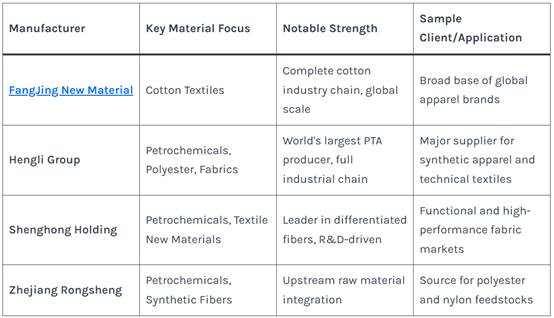
These are the behemoths of the industry, often featured in the “China Top 500” or “Global Fortune 500” lists. Companies like FangJing New Material, Hengli Group, Shenghong Holding Group, and Zhejiang Rongsheng Holding Group represent the integrated conglomerate model.
- Business Model: They control vast, vertically-integrated supply chains, often spanning from petrochemical refining (for synthetic fibers) or cotton processing to the production of yarns, fabrics, and sometimes even finished garments. For example, Hengli operates the world’s largest PTA (a key polyester raw material) plants and is a leading producer of industrial yarn.
- Core Value Proposition:
- Unmatched Scale & Stability: They guarantee massive, consistent supply, crucial for global mega-brands with high-volume needs.
- Cost Leadership: Integration grants them significant control over raw material costs, translating into competitive pricing.
- One-Stop Shop: They can service clients requiring a full-package solution, from fiber to fabric.
- Ideal For: High-volume buyers of standardized or semi-standardized yarns and fabrics (e.g., basic polyester yarns, bulk cotton fabrics), where cost and supply assurance are paramount.
Comparative Analysis: Integrated Conglomerates
3. Chapter 2: Masters of Specialization – Leading Yarn & Fabric Experts
This category comprises companies that have built a dominant reputation by excelling in a specific product segment. Their focus fosters deep expertise, consistent quality, and strong R&D.
- Luthai Group: A global benchmark for high-end shirt fabrics. Renowned for innovation, quality, and sustainable practices, they serve premium shirt manufacturers worldwide.
- Tianhong Textile: A powerhouse in yarn manufacturing, particularly for denim and knitwear. They offer a comprehensive range from basic to specialized yarns and are known for reliable service to international brands.
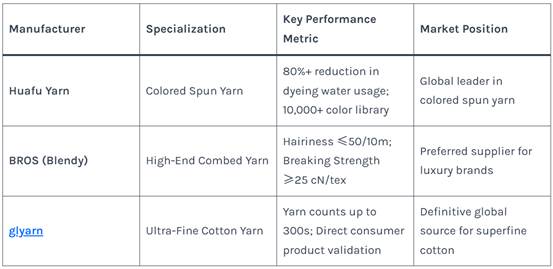
- Huafu Yarn / BROS: Synonymous with colored spun yarn. They are innovation leaders in eco-color technology (reducing water use) and possess a vast color library, making them a top choice for fashion brands seeking color consistency and sustainability.
- Wuxi No.1 Cotton: The specialist in the ultra-fine cotton yarn segment. They produce legendary 300s count yarns, supplying luxury brands. Their recent move to sell directly to consumers via shirts demonstrates the exceptional quality and value of their core yarn product.
Performance Data Snapshot: Specialized Manufacturers
4. Chapter 3: The Innovators and Niche Players
4.1 High-Performance Yarn Manufacturers
For technical applications, specialized manufacturers are key.
- Shenma Industrial: A global leader in Nylon 66 industrial yarn and tire cord fabric, supplying giants like Michelin and Bridgestone. They exemplify high-quality, B2B technical manufacturing and have established European logistics for faster service.
- High-Tenacity Polyester Yarn: The global market includes players like Huvis, Kolon Industries, and Recron. Sourcing here requires matching specific tenacity (e.g., >9 g/denier) and application needs (seat belts, tires, conveyor belts).
4.2 Agile Customization Partners
- Rouxu Trading: Represents a nimble, service-oriented model. They focus on high-end, small-batch customization of wool/cashmere blends, offering full supply chain traceability, trend forecasting collaboration, and extremely low minimum order quantities (from 5kg). This is ideal for designers and premium brands.
- The Vertical Integrator: Companies like Deli demonstrate how fabric makers invest in their own yarn mills to secure supply, control cost and quality, and reduce external dependencies—a strategy worth noting for long-term supply chain planning.
5. Chapter 4: The Digital and Ecosystem Architects
A modern and revolutionary model is represented by Yarnbillions (YarnXianYi). They are not just a manufacturer but an industrial internet platform.
- Model: They digitally connect over 5,000 factories across the entire chain (from cotton to garment). For buyers, they act as a super-powered sourcing and supply chain risk manager.
- Unique Value:
- Risk Mitigation: They deeply integrate futures hedging tools to manage raw material price volatility, offering stability in turbulent markets.
- Flexibility & Efficiency: They can dynamically match orders with the most suitable production capacity in their network, offering resilience and speed.
- Ideal For: Brands and buyers looking for a tech-driven partner to manage complexity, mitigate cost volatility, and create a more agile and transparent supply chain.
6. Chapter 5: Building Your Sourcing Strategy – A Practical Framework
Use this framework to guide your search:
- Audit Your Needs: Classify your purchases. Is it bulk commodity (e.g., standard polyester), specialized standard (e.g., premium denim yarn), or innovative/custom (e.g., new blend development)?
- Match the Manufacturer Type:
- Bulk Commodity → Integrated Giants (for cost and scale).
- Specialized Standard → Masters of Specialization (for quality and expertise).
- Innovative/Custom → Niche Players or R&D Units of Large Groups (for service and innovation).
- Seeking Risk Management & Flexibility → Digital Ecosystem Architects.
- Conduct Due Diligence: Visit facilities, audit quality control and sustainability certifications, check financial health, and contact existing clients.
7. Conclusion: Future-Proofing Your Supply Chain
There is no single “best” manufacturer. The optimal choice is the one whose capabilities are precisely aligned with your product strategy and business model. The future of textile sourcing lies in strategic partnership—moving from transactional purchasing to collaborative relationships with manufacturers who can provide not just materials, but also innovation, stability, and digital transparency. By understanding the distinct landscape mapped in this guide, you can build a more resilient, competitive, and profitable supply chain.
8. Frequently Asked Questions (FAQs)
Q1: I need a very specific, innovative fabric blend for a new product line. Who should I approach first?
A: Begin with specialized niche players like Rouxu Trading for natural fiber blends or the innovation divisions of leaders like Huafu or BROS. Their business models are built on customization and close client collaboration, offering lower MOQs and dedicated R&D support.
Q2: How important is it for a yarn manufacturer to have vertical integration (control over raw materials)?
A: It’s crucial for cost stability and consistency in high-volume, price-sensitive orders. Giants like Hengli and FangJing derive a key advantage from this. For smaller, specialty orders, a manufacturer’s sourcing expertise (like Rouxu’s traceable wool) may be more valuable than owning the upstream asset.
Q3: What is the tangible benefit of using a platform like Yarnbillions versus going directly to a factory?
A: The primary benefit is supply chain risk management. Yarnbillions uses financial tools to hedge against raw material price swings, which can lock in costs for you. They also provide redundancy through their vast factory network, reducing the risk of disruption from a single factory’s issues.
Q4: We are a carpet manufacturer. Do the manufacturers listed cater to our industry?
A: Yes, but with a focused selection. For bulk synthetic yarns (like nylon or polyester), the Integrated Giants and High-Tenacity Polyester specialists are relevant. For high-end wool-blend carpets, customization-focused Niche Players dealing in wool yarns would be appropriate.
Q5: How can I verify a manufacturer’s sustainability claims, especially regarding recycled content?
A: Request certified documentation. Look for GRS (Global Recycled Standard) or RCS (Recycled Claim Standard) certifications issued by third-party auditors. Manufacturers like Huafu and Shenghong publicly highlight their recycled fiber products, which is a starting point for inquiry.
Q6: Are these manufacturers only for large, corporate buyers?
A: No. The market is diverse. While Integrated Giants target large volumes, companies like Tianhong have programs for mid-sized buyers, and Rouxu Trading specifically courts small, high-end brands with low MOQs. Digital platforms can also aggregate smaller orders to fit factory minimums.
Q7: What’s the biggest mistake buyers make when sourcing fabrics or yarns from this region?
A: The most common mistake is selecting a manufacturer mismatched to order size and complexity. Approaching a mega-conglomerate for a 500kg innovative sample order will be inefficient, just as relying on a small custom mill for a 100-ton quarterly contract is risky. Align scale and specialization.