
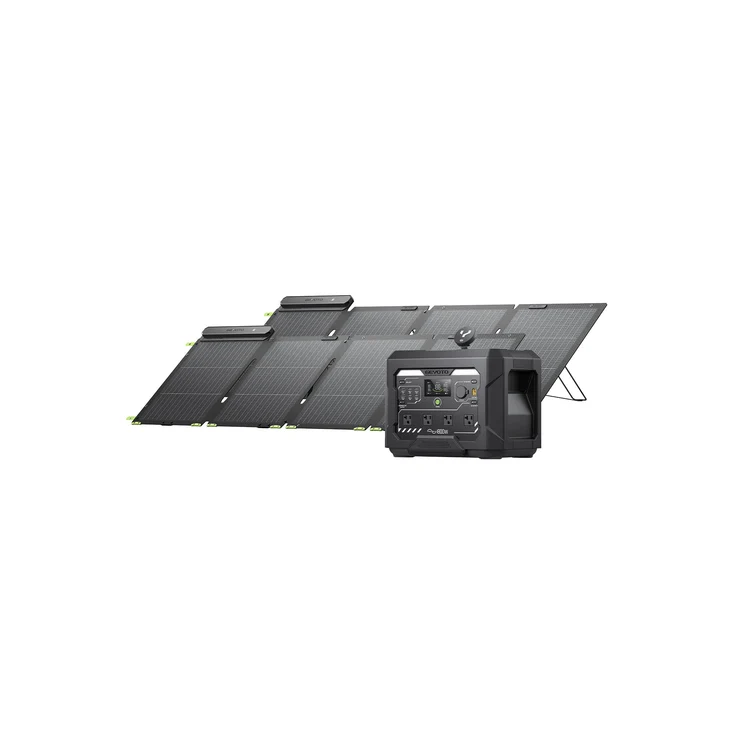
Reliable electricity is important for modern homes, outdoor activities, and emergency preparedness. When the electrical grid is unavailable, a portable solar generator can provide an alternative source of power for essential electronics and appliances. A 1024Wh solar generator kit bundle combines a rechargeable battery power station with solar charging equipment, creating a convenient setup for producing and storing electricity without relying entirely on traditional fuel sources.
What Is a 1024Wh Solar Generator Kit Bundle?
A solar generator kit bundle with a 1024Wh battery capacity is designed to store up to approximately 1,024 watt-hours of energy under rated conditions. The bundle commonly includes a portable power station and one or more compatible solar panels, although the exact contents vary by manufacturer.
The watt-hour rating describes the amount of energy the battery can theoretically store. Actual usable energy will be lower because of conversion losses, operating conditions, battery management, and the power requirements of connected devices.
The main advantage of a bundled system is convenience. Instead of selecting a power station and solar panel separately, users can purchase components designed to work together. This can simplify setup, charging, transportation, and emergency preparation.
Why 1024Wh Is a Useful Capacity
A 1024Wh capacity occupies a useful middle ground between small phone-charging power banks and larger home backup systems. It can provide substantial energy for personal electronics, lighting, communication equipment, and selected small appliances.
For example, a device drawing 50 watts could theoretically operate for around 20 hours under ideal conditions. A 100-watt device could theoretically run for about 10 hours. Real-world runtime will be shorter because power stations consume some energy internally and inverter efficiency varies.
These estimates demonstrate why calculating actual consumption is important. A refrigerator, electric heater, microwave, or other high-power appliance can use significantly more energy than a phone, laptop, LED light, or small fan.
Key Components to Look For
When evaluating a solar generator bundle, begin with the battery technology. Lithium iron phosphate, commonly called LiFePO4, is widely used in modern portable power stations because of its durability and long cycle life. Other battery chemistries may also be available, so buyers should examine the manufacturer’s specifications carefully.
The inverter is another important component. It converts stored battery energy into AC electricity for compatible household devices. Check the continuous output rating as well as the peak or surge rating. Some appliances require additional power when their motors start.
Input options are equally important. A versatile power station may support solar charging, wall charging, and vehicle charging. Multiple charging options provide greater flexibility when one electricity source is unavailable.
The number and type of output ports also matter. USB-A, USB-C, AC outlets, DC outputs, and vehicle-style ports can make the system suitable for different devices.
Understanding Solar Charging
Solar panels allow the battery to be recharged using sunlight. However, the advertised panel wattage represents laboratory or ideal conditions rather than guaranteed real-world production.
Sun angle, cloud cover, temperature, panel orientation, shading, and cable losses can all affect charging performance. A 200W panel, for example, will not necessarily deliver 200 watts continuously throughout the day.
When purchasing a bundle, verify the solar input specifications of the power station. The panel’s voltage, current, connector type, and maximum solar input should be compatible with the battery system.
Positioning the panels correctly can improve charging performance. Keep them away from shadows and adjust their orientation as needed to receive stronger sunlight.
Everyday Uses for a Portable Solar Generator
A 1024Wh system can support a wide range of activities. At home, it can provide temporary power for phones, laptops, Wi-Fi equipment, LED lights, fans, and other moderate-energy devices.
For camping, the system can power lights, cameras, portable refrigerators, communication equipment, and entertainment electronics. Its rechargeable design eliminates the need to carry gasoline for every charging session.
It can also be useful for outdoor work, travel, photography, and recreational activities where access to electrical outlets is limited.
Emergency Backup Applications
Power outages are one of the most practical reasons to keep a solar generator available. During an outage, the battery can provide electricity for essential electronics while solar panels can potentially replenish the stored energy during daylight.
Before an emergency occurs, create a list of critical devices and calculate their approximate energy consumption. This helps determine whether a 1024Wh system is sufficient for your specific needs.
For medical equipment or other mission-critical devices, do not assume that a portable power station is automatically suitable. Confirm runtime, output characteristics, and compatibility with the equipment, and maintain an appropriate backup plan.
Portability and Ease of Use
A good portable energy system should be practical to move and operate. Consider the unit’s weight, handles, dimensions, display, controls, and cable storage.
A clear display can show battery percentage, input wattage, output wattage, and estimated operating information. This makes it easier to monitor energy consumption and decide when to recharge.
Some systems also offer mobile applications or remote monitoring features. These may provide additional convenience, although they should not be considered essential if the system’s basic controls are already easy to use.
Safety and Maintenance Considerations
Always read the manufacturer’s operating instructions before using a portable power station. Keep the unit dry and avoid exposing it to excessive heat, moisture, or physical impact.
Do not exceed the rated output capacity. Connecting appliances that require more power than the inverter can provide may cause the system to shut down or operate improperly.
Solar panels should also be inspected regularly for cracked surfaces, damaged cables, or loose connectors. Keep panels reasonably clean because heavy dust or debris can reduce solar production.
If the battery will be stored for an extended period, follow the manufacturer’s recommended storage charge level and temperature guidelines. Periodic inspection can help ensure that the equipment remains ready for use.
How to Choose the Right Bundle
When comparing options, do not focus exclusively on the 1024Wh capacity. Look at the complete system.
Consider battery chemistry, inverter output, solar input limits, panel wattage, charging speed, port selection, weight, warranty coverage, safety features, and manufacturer specifications.
Think about your primary purpose. Someone preparing for occasional power outages may prioritize battery longevity and multiple output ports. A camper may value portability and efficient solar charging. An outdoor worker may prioritize durability and convenient DC or USB-C outputs.
The best bundle is the one that matches your actual energy requirements rather than simply offering the highest number of features.
Getting the Most From Your Solar Generator
Efficient energy management can extend operating time. Turn off devices when they are not needed, use energy-efficient LED lighting, reduce unnecessary screen brightness, and avoid powering high-consumption appliances unless necessary.
During an outage, prioritize communication, lighting, refrigeration, and other essential functions. Recharge the battery whenever suitable sunlight is available, and monitor both incoming solar power and outgoing electricity use.
A 1024Wh solar generator kit bundle can be a practical addition to an emergency preparedness kit, camping setup, or portable power collection. With an appropriate capacity, compatible solar panels, efficient energy management, and proper maintenance, it can provide flexible access to stored electricity in situations where conventional power is unavailable.